

A journey into the world of One Thousand and One Nights unfolds across the 233 lots featured in the Islamic and Indian Art sale (2 July 2026) and the Oriental Art sale (3 July 2026), organised by Il Ponte in collaboration with the experts of the Millon Auction Group (MAG).
These two events reflect a shared commitment to promoting, also in Italy, artistic traditions that are attracting growing international attention, with the Middle Eastern and Chinese markets emerging as particularly promising horizons for contemporary collectors.
The two-day auction programme opens on 2 July with the sale dedicated to Islamic and Indian Art, showcasing the richness of a sophisticated and layered artistic production imbued with spirituality. A notable example is the rare early twentieth-century Kashan carpet (lot 68, €4,500–5,000), in which a remarkable dialogue between Sufi mysticism and Christian tradition takes shape through Marian iconography—the Virgin, Child and Archangel Gabriel—framed by an elegant border of poetic inscriptions drawn from Rumi’s Masnavi.
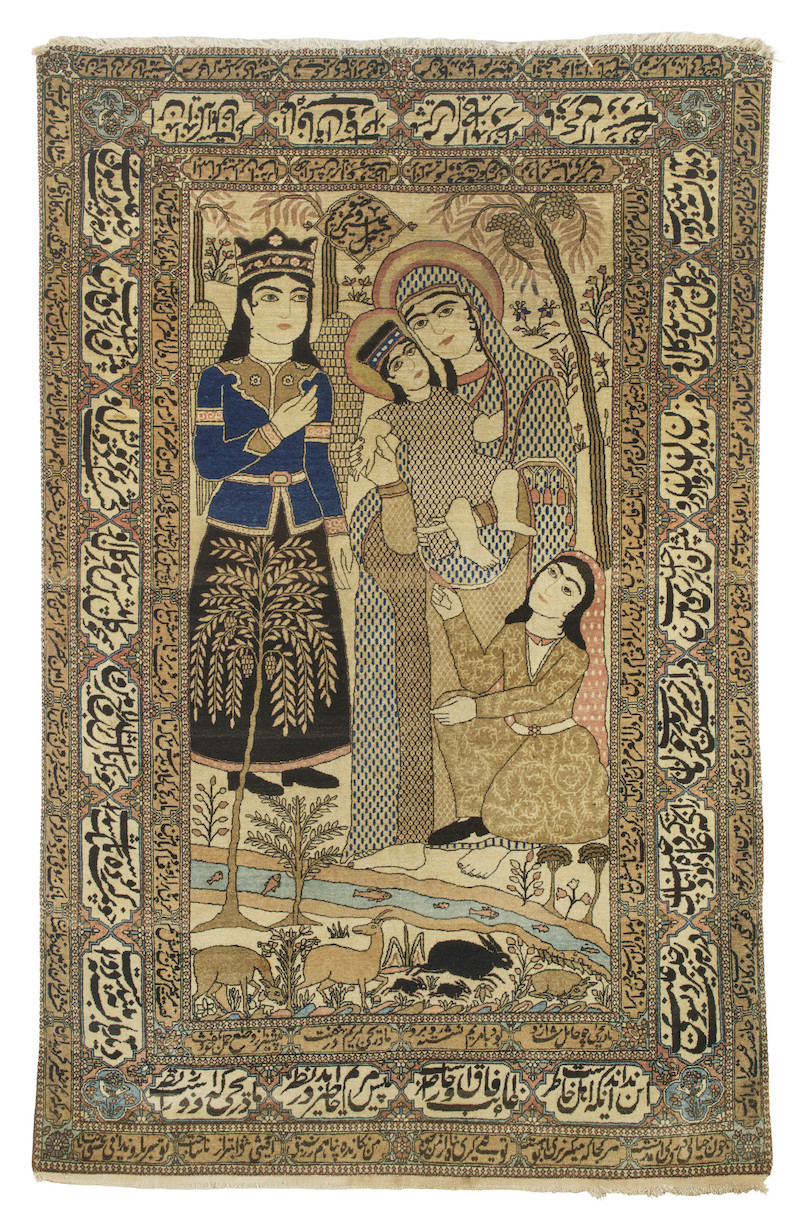
Lot 68
Figurative carpet with a Marian scene and Sufi calligraphies
Iran, Kashan, early 20th century (cm 206 × 130)
Estimate € 4.500 - 5.000
Particularly striking in its visual impact is the large nineteenth-century Qajar tile panel from Iran (lot 72, €15,000–20,000). Set against a cobalt-blue ground, the monumental royal hunting scene depicts horsemen, hounds and wild boars enlivening a courtly landscape that recalls the Safavid tradition and Persian court painting.
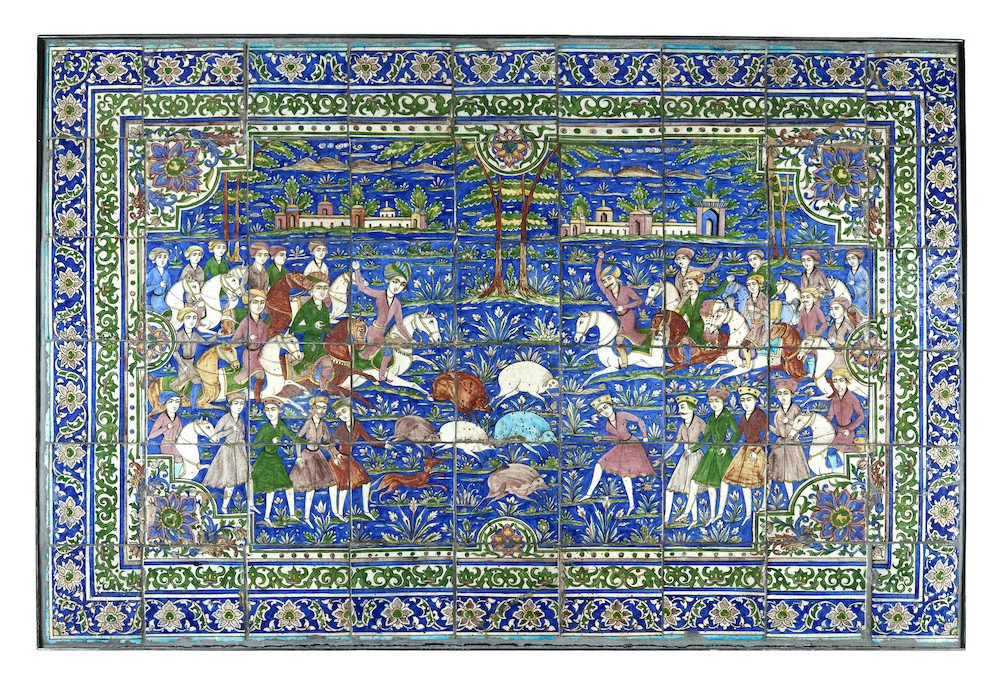
Lot 72
A large tile panel of fifty-four polychrome ceramic tiles painted under transparent glaze on a cobalt blue ground, depicting a royal hunting scene (shikar)
Iran, Qajar period, late 19th century.
(cm 180x120 ca)
Estimate € 15.000 - 20.000
Of particular historical and documentary significance is the series of twelve architectural views of Delhi and Agra, executed around 1840 (lot 69, €2,000–3,000). Rendered with delicate watercolour and highlighted with gold, the works depict the principal monuments of northern India—from the Taj Mahal and Jama Masjid to the great Mughal imperial tombs—following the tradition of albums produced for European and Anglo-Indian patrons.
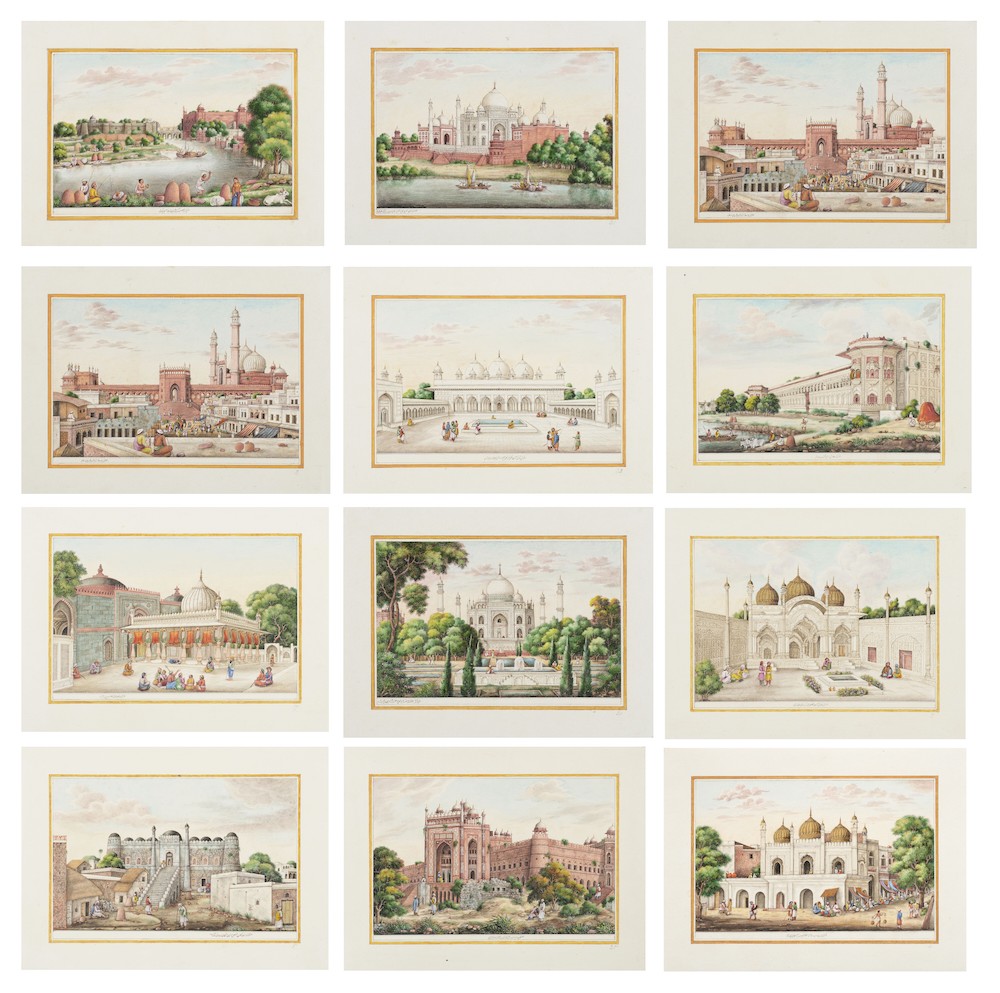
Lot 69
Twelve architectural views of Delhi and Agra
North India, Delhi School, circa 1840
Estimate € 2.000 - 3.000
The vitality of Vaishnavite devotion is expressed in two folios depicting the childhood of Krishna, originating from Rajasthan and dating to the late nineteenth century (lot 71, €5,000–6,000). Episodes from the Bhagavata Purana unfold through vivid colours, rich narrative detail and inscriptions in Devanagari script.
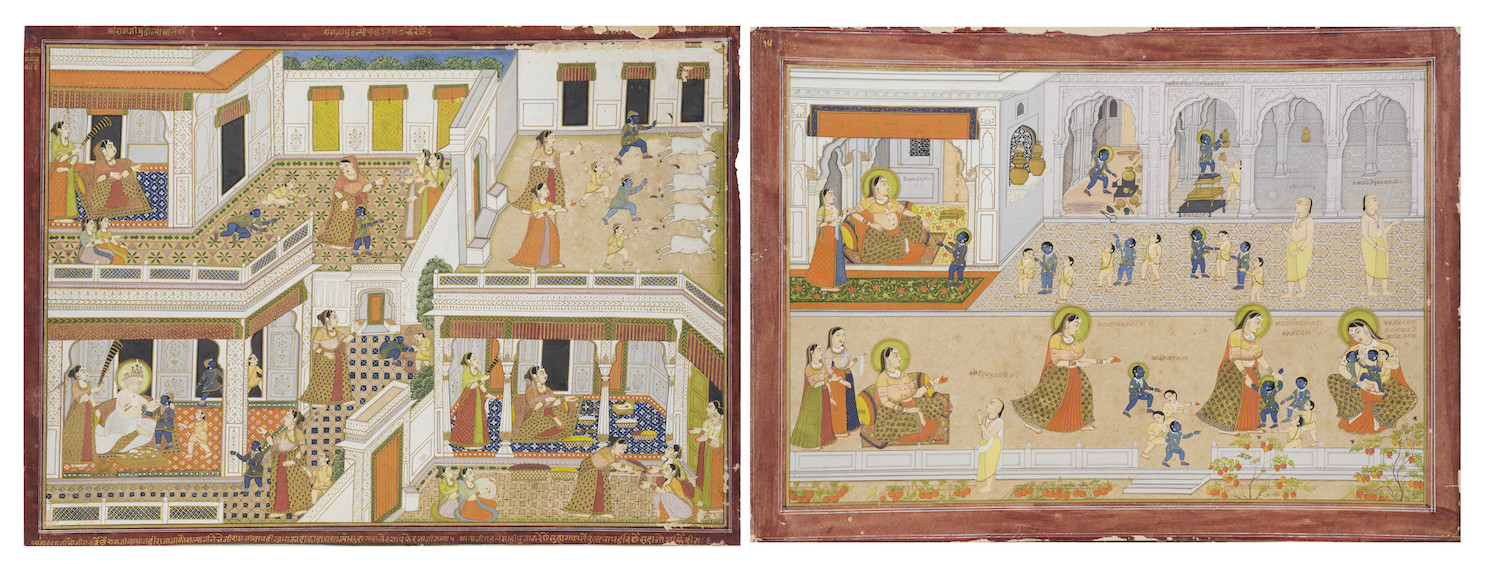
Lot 71
Two folios illustrating the childhood of Krishna
North India, Rajasthan, probably Mewar, late 19th century (Folio 1: cm 30 × 41; folio 2: cm 30,5 × 42)
Estimate € 5.000 - 6.000
Among the highlights of the sale is also a Gandharan schist relief panel, dating from the second to the third century AD (lot 65, €4,500–5,000), with Buddha Shakyamuni at the centre of the composition, surrounded by worshippers making offerings. Essential and solemn in its imagery, the work bears witness to the first great flourishing of Buddhist art in the ancient world.
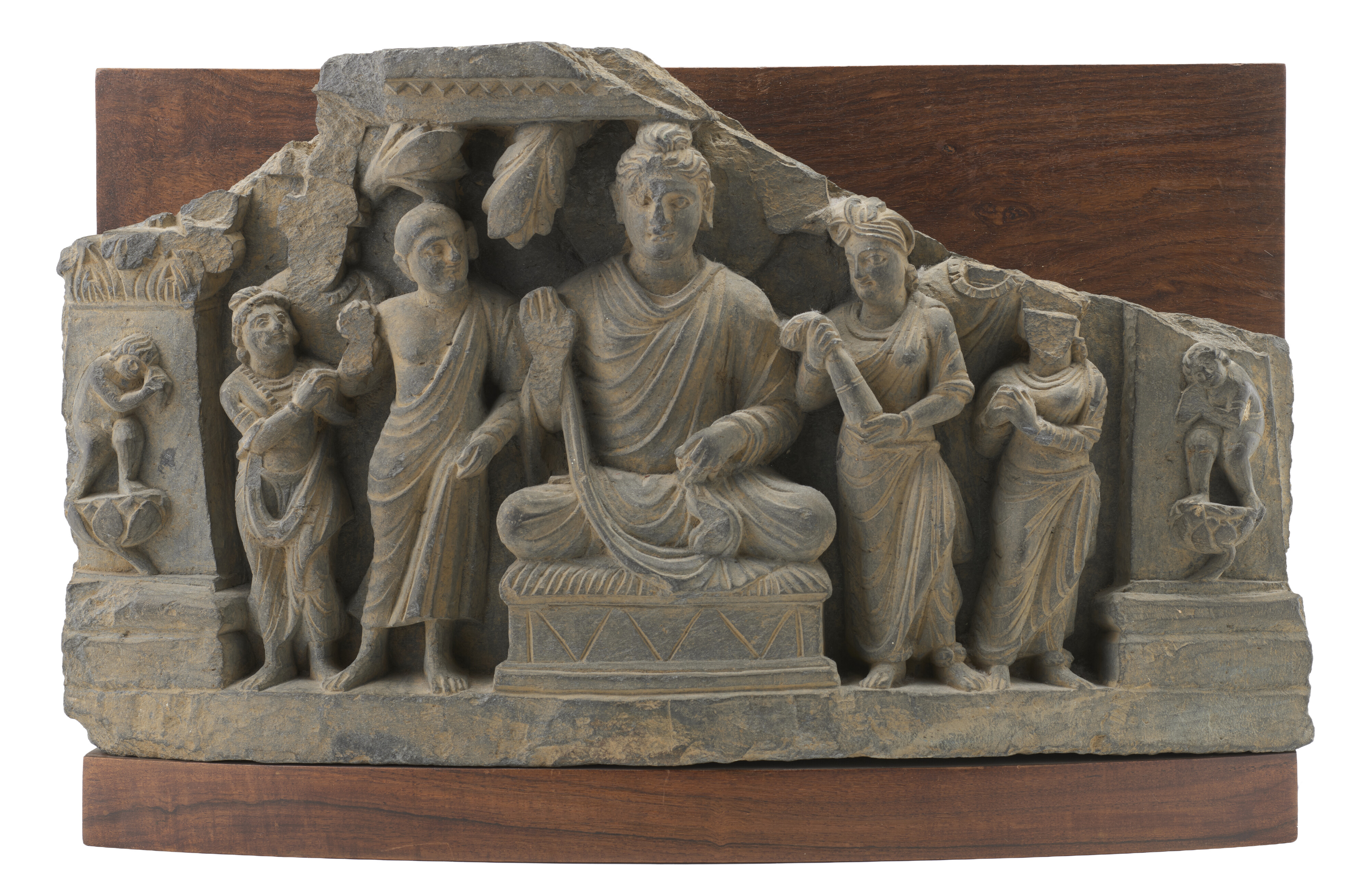
Lot 65
Relief panel in grey schist depicting The Offering of Four Bowls to the Buddha.
Ancient region of Gandhara, 2nd-3rd century AD (cm 42 × 24)
Estimate € 4.500 - 5.000
On 3 July, the focus shifts to Oriental Art, with a group of works in which the complexity and refinement of Chinese and Tibetan production create an ideal dialogue between court art, ritual objects and high-ranking craftsmanship.
Chinese art is represented by several remarkable works. Among them is the large blue-and-white porcelain dish produced during the Qing dynasty, Guangxu period (lot 232, €8,000–12,000), in which decorative models associated with the imperial tradition are reinterpreted through a vibrant scene featuring dragons and phoenixes, symbols of power and cosmic harmony.
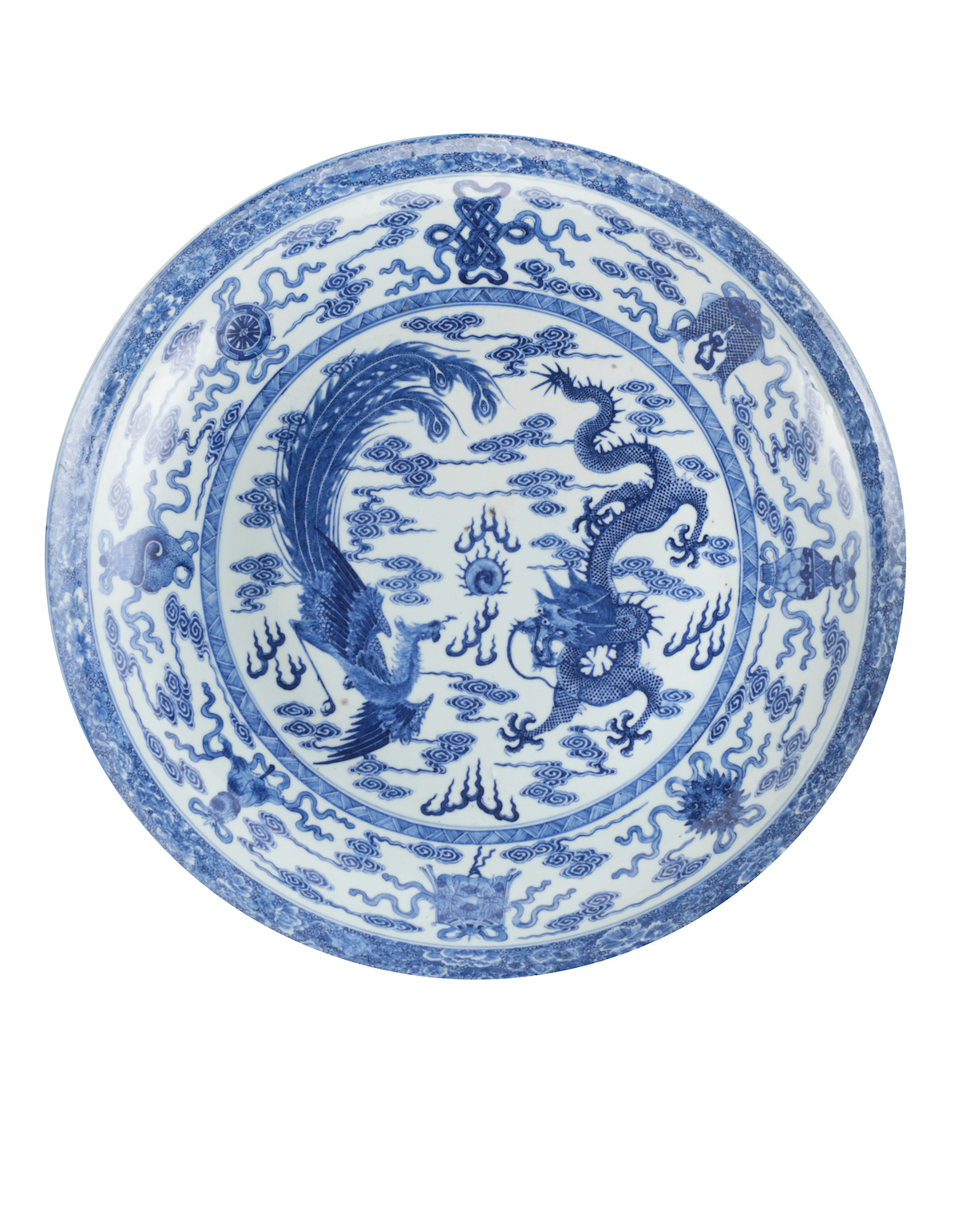
Lot 232
Large blue and white porcelain plate decorated with dragon and phoenix motifs.
Apocryphal Kangxi mark on the base.
China, Qing dynasty, Guangxu period (1875-1908)
(diam. cm 40)
Estimate € 8.000 - 12.000
Another outstanding piece is the mercury-gilt bronze incense burner, dating to the Ming dynasty and bearing a mark and references to the Jiajing period (lot 211, €5,000–6,000). Its circular body, finely repoussé-worked and chased with birds among clouds, rests on three bulb-shaped feet decorated with ruyi motifs, while the S-shaped handles and six-character inscription around the neck convey the full solemnity of imperial court ritual objects.
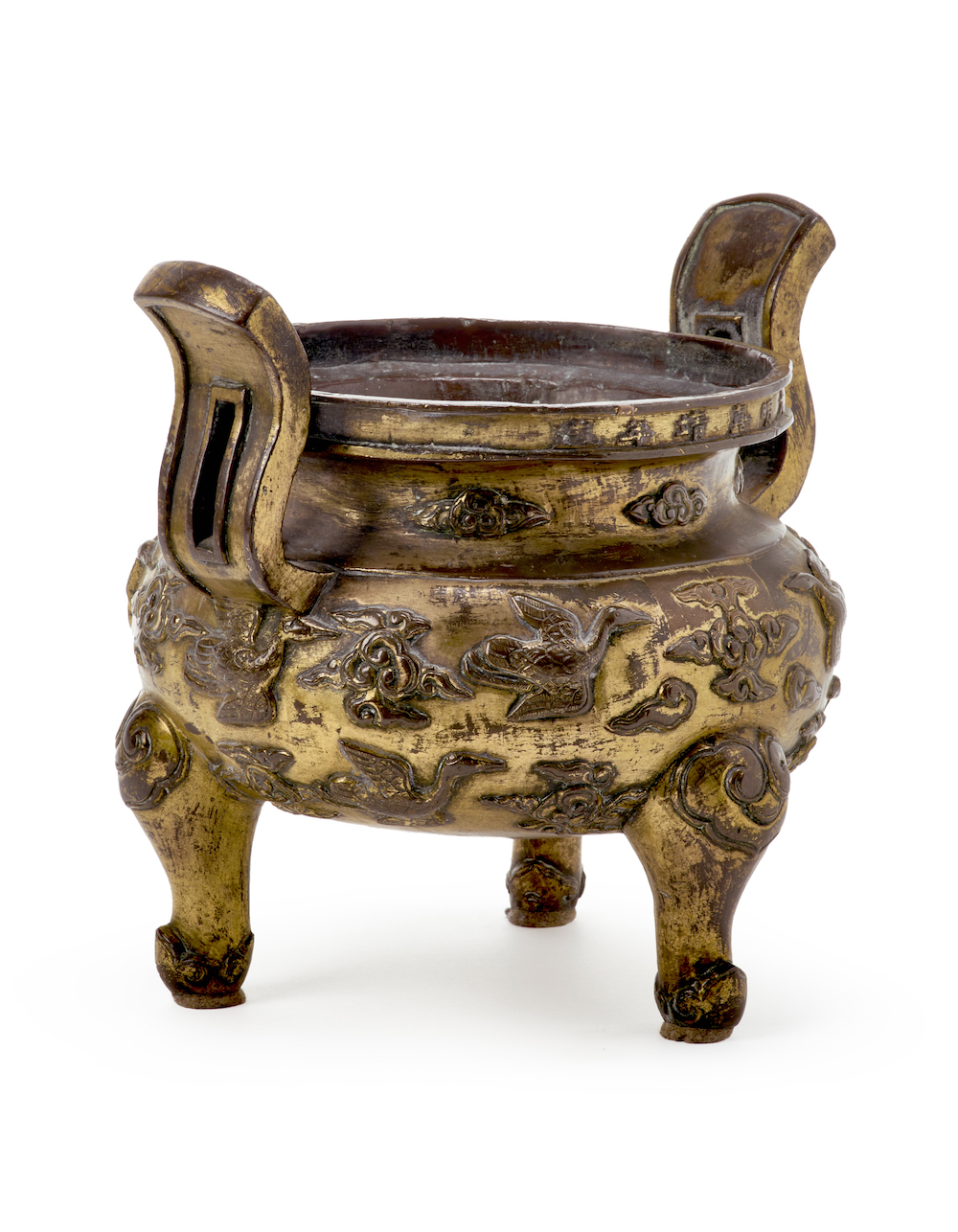
Lot 211
Rare mercury-gilt bronze censer
China, Ming dynasty (1368–1644), 16th century (cm 23 × 20)
Estimate € 5.000 - 6.000
The refinement of court attire is exemplified by the tribute fan, attributed to the Qing dynasty, Qianlong period (lot 210, €1,000–1,200), distinguished by its meticulous sculptural workmanship in ivory and tortoiseshell. Equally noteworthy is the long red dragon robe (pao) from the Guangxu period (lot 209, €3,000–5,000), emblematic of the Qing textile tradition, in which the presence of dragons underscores the rank and authority of the sovereign through a codified and immediately recognisable visual language.
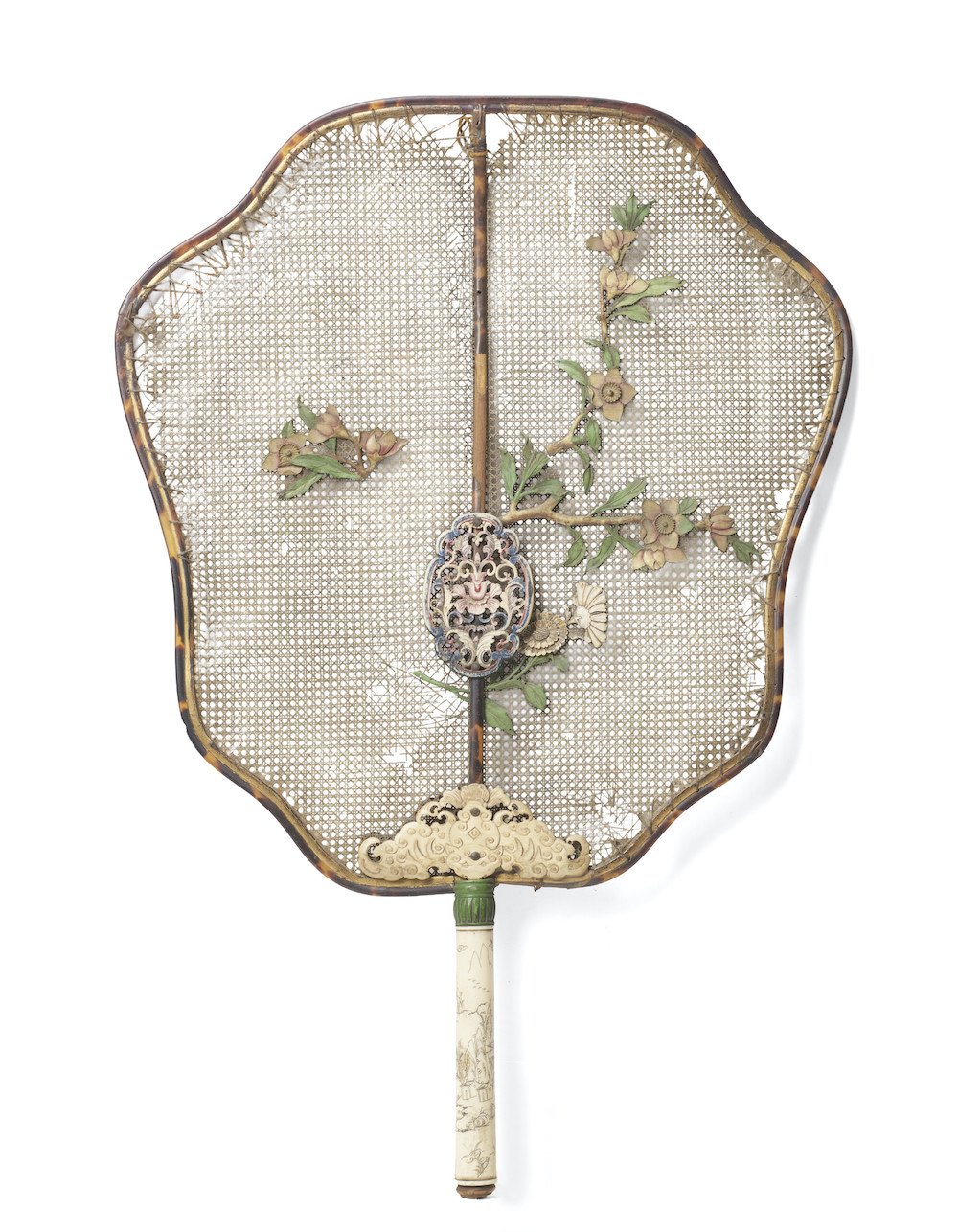
Lot 210
A rare rigid tribute fan with ivory and tortoiseshell elements
China, Qing dynasty, Qianlong period (1736–1796) (cm 47 × 32)
Estimate € 1.000 - 1.200
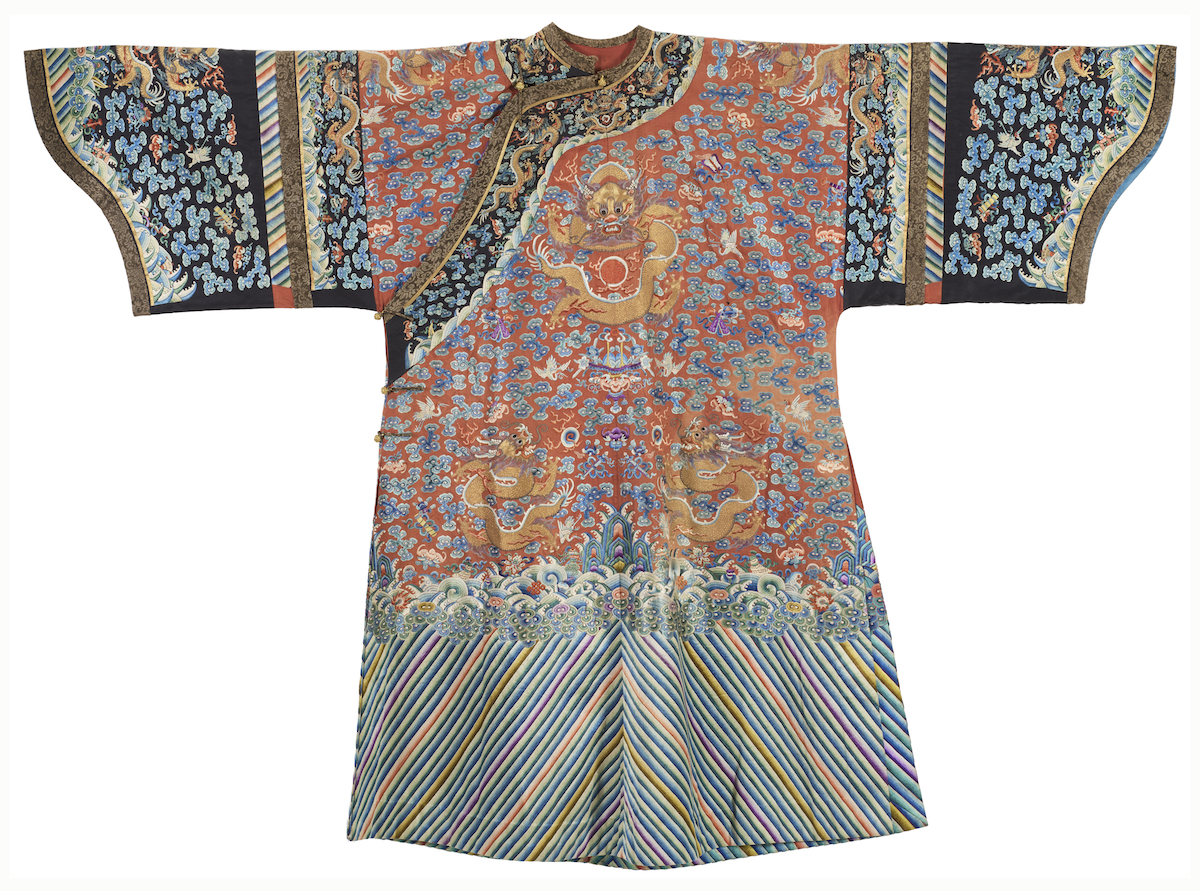
Lot 209
Imperial Court Robe with Dragon Motifs
China, Qing Dynasty, Guangxu Period (1875–1908)
(h. cm 138)
Estimate € 3.000 - 5.000
Textile art also features in the imperial edict scroll in damask silk, attributable to the Daoguang period (lot 207, €3,000–5,000). The scroll preserves a bilingual text in Chinese and Manchu, in keeping with the administrative traditions of the Qing court, and stands as a valuable testimony to the bureaucratic machinery of the Empire.
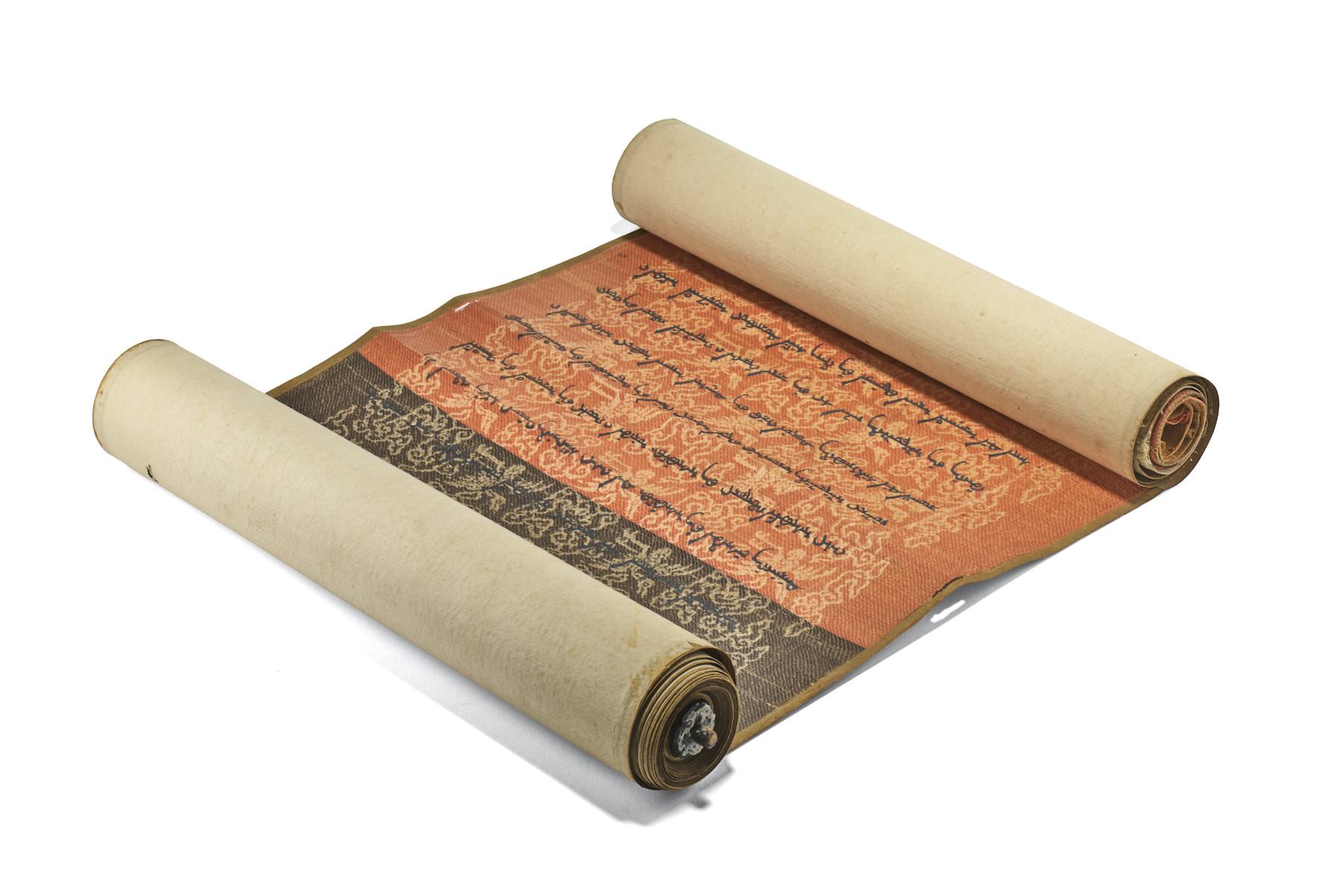
Lot 207
Imperial honorary edict scroll on multicolored damask silk woven with dragons and stylized clouds in shades of yellow, cream, red, brown, and blue.
China, Qing dynasty, Daoguang Emperor period, circa 1835, 19th century.
Estimate € 3.000 - 5.000
For the Tibetan section, particular attention is drawn to a selection of five eighteenth-century thangkas, including an example depicting four of the Sixteen Great Arhats (lot 208, €2,000–3,000). The composition arranges ascetic and hieratic figures within a symbolic landscape according to the conventions of Buddhist devotional painting, rendered here with exceptional chromatic intensity and narrative power.
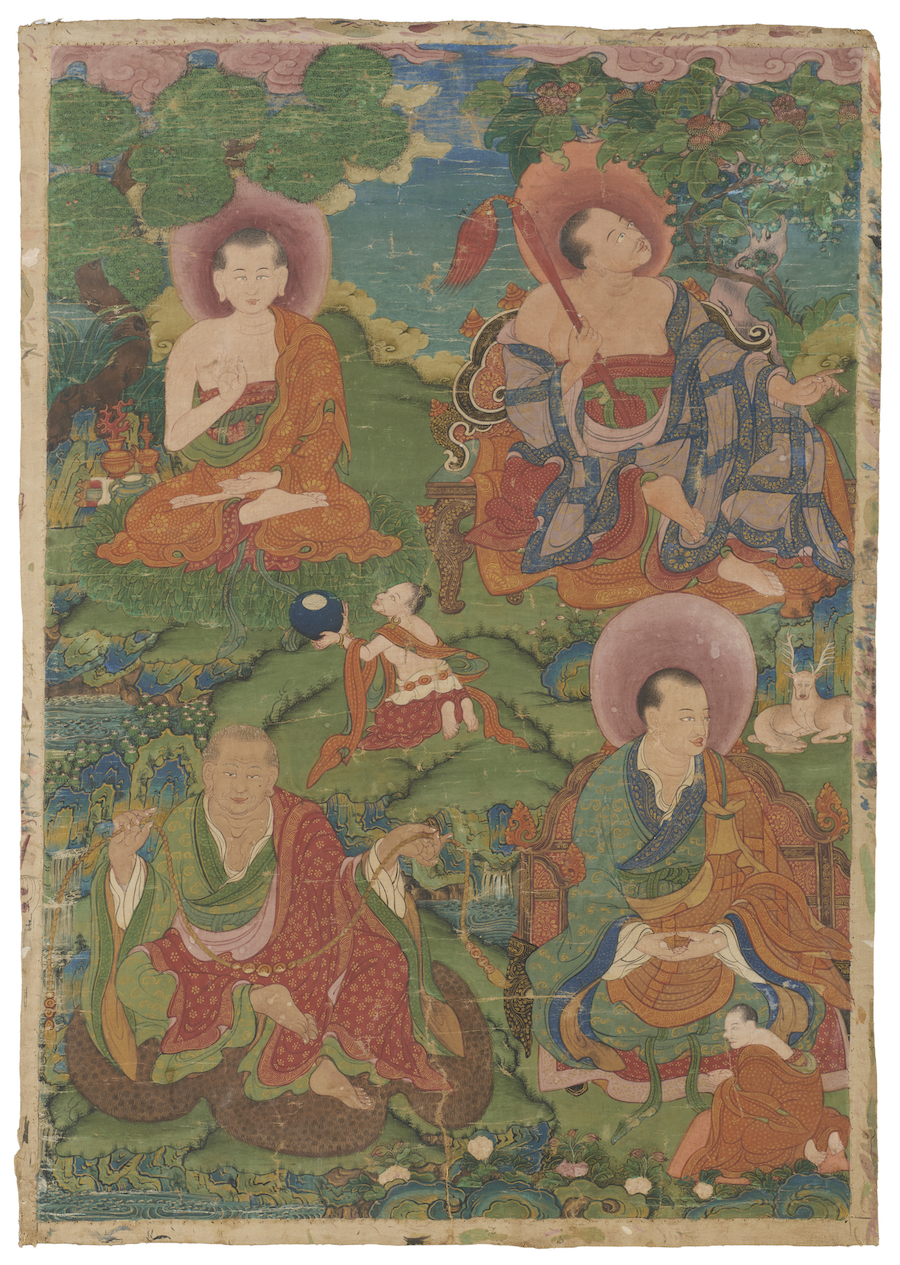
Lot 208
Thangka painted on cotton, depicting four of the Sixteen Great Arhats
Tibet, 18th century
Estimate € 2.000 - 3.000