





Lot n° 297 | Auction 748
Estimate € 100,000 - 150,000
Auction: 16 December 2025 at 10:00
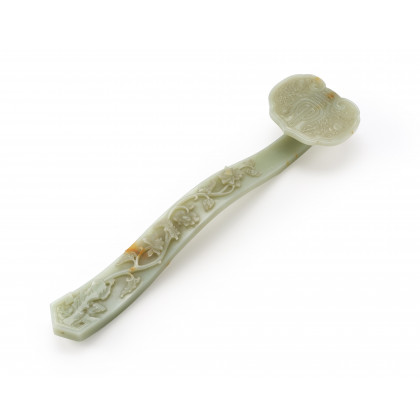
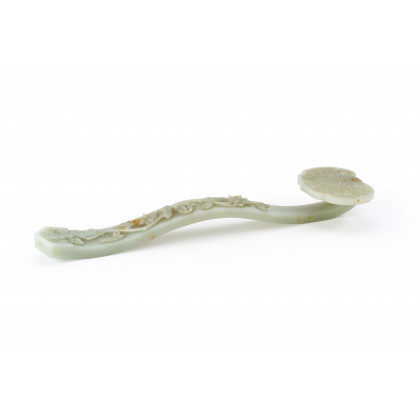
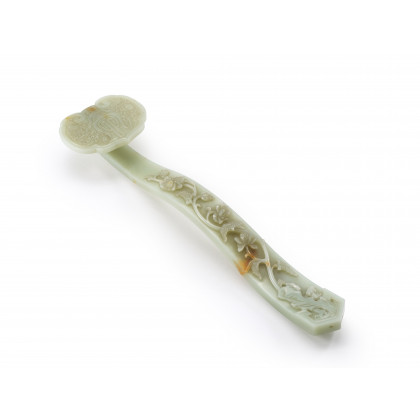
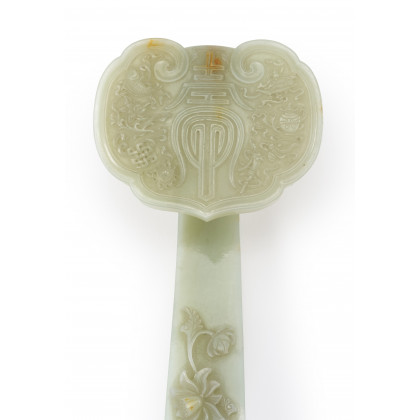
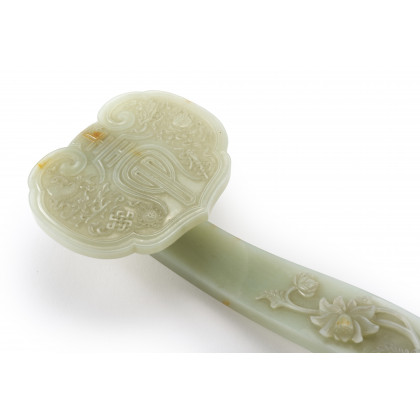
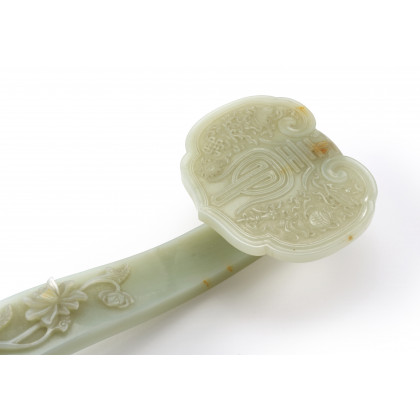
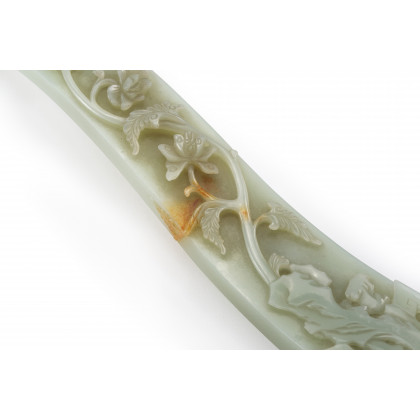
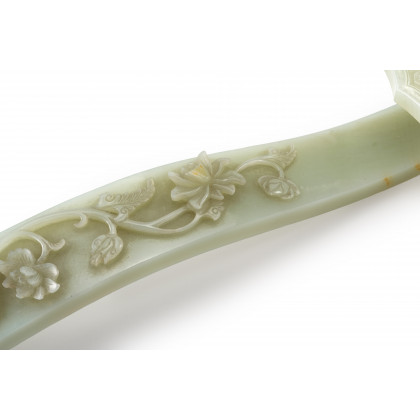
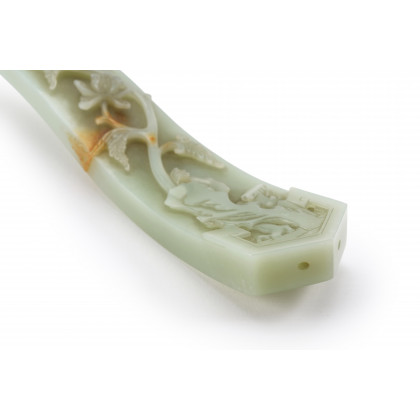
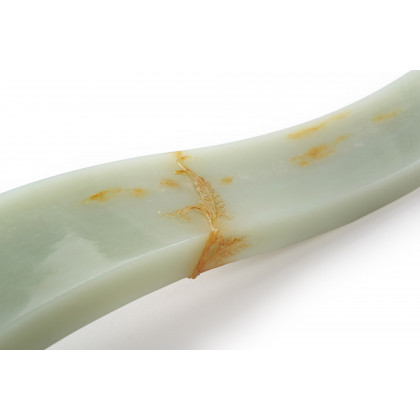
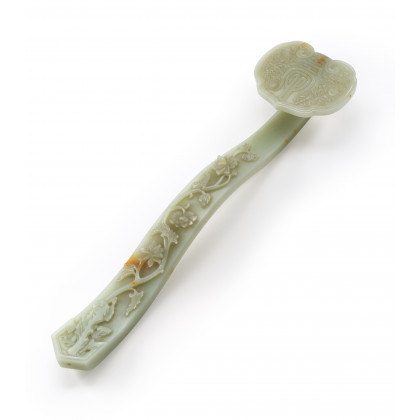
A rare ruyi sceptre in light celadon jade with russet inclusions. China, Qing dynasty, Qianlong period (1736-1796) Length: 42 cm. Of elegant, elongated form, the sceptre is carved from a luminous pale celadon jade suffused with warm russet tones. The head is finely worked in low relief with the Eight Buddhist Emblems (babao), symbolizing spiritual attainment and prosperity, emerging from dense scrolling foliage. The handle is gracefully adorned with entwined lotus stems and blossoms, rendered with remarkable delicacy and naturalism. Particularly striking in the present example is the sculptor’s sensitive use of the stone’s natural russet inclusions to enhance the composition - subtly integrating them into the design to create a sense of organic continuity across both faces of the sceptre. The harmonious proportions, refined modeling, and lustrous polish reveal the hand of an accomplished craftsman working to the highest standards of the Qianlong court. The ruyi sceptre - literally “as you wish”- embodies both auspicious and imperial significance. During the Qianlong reign, such objects were far more than ornamental treasures: they served as potent symbols of authority, benevolence, and good fortune. Jade examples, prized for their purity and translucence, were among the most esteemed, often presented by the emperor as tokens of imperial favor or bestowed as diplomatic gifts. The lotus motif, associated with purity and enlightenment, together with the Eight Buddhist Emblems, reflects the Qianlong Emperor’s deep engagement with Buddhist imagery and his vision of harmony between religion, virtue, and imperial power. The exceptional quality of the carving and the subtle integration of natural color variations suggest production in one of the imperial jade workshops which flourished under direct court supervision. The soft celadon hue of the stone was especially prized in the 18th century, reflecting ideals of restraint, refinement, and moral integrity central to both literati taste and imperial aesthetics.
Estimate € 100,000 - 150,000