

Lot n° 75 | Auction 787
Estimate € 100 - 200
Auction: 03 July 2026 at 10:00
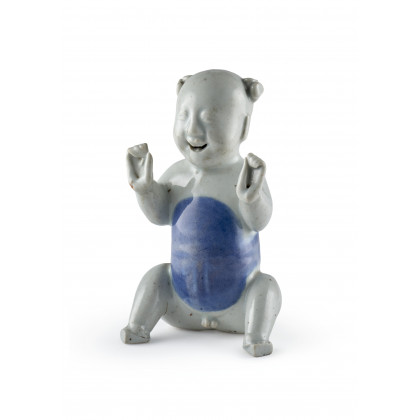
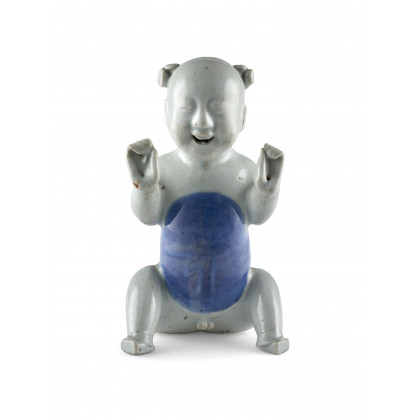
Ho Ho seated porcelain glazed figure China, Qing dynasty (1644–1911), 18th century (cm 7 × 12) (defects) In the eighteenth century, the kilns of Jingdezhen in southeastern China produced vast numbers of porcelain figures depicting both people and animals. Local potters created these works based on traditional subjects—such as deities and mythological creatures—as well as on European models introduced by foreign supervisors. This piece most likely represents one of the Hehe Erxian, the Taoist Immortal Twins who, in Chinese popular tradition, symbolize harmony. Identical examples formed part of the cargo of the **Geldermalsen**, a vessel of the **Dutch East India Company** that sank in Indonesia in 1752. Since these figures do not appear in the records of official Dutch orders, they are generally believed to have been private purchases. In Europe, similar porcelain figures adorned the residences of nobles and wealthy bourgeois families, where they were displayed in the celebrated “porcelain rooms.” Among the most remarkable collections of the period was that of Augustus the Strong of Saxony (d. 1733), which comprised more than 21,000 Chinese works.
Estimate € 100 - 200